
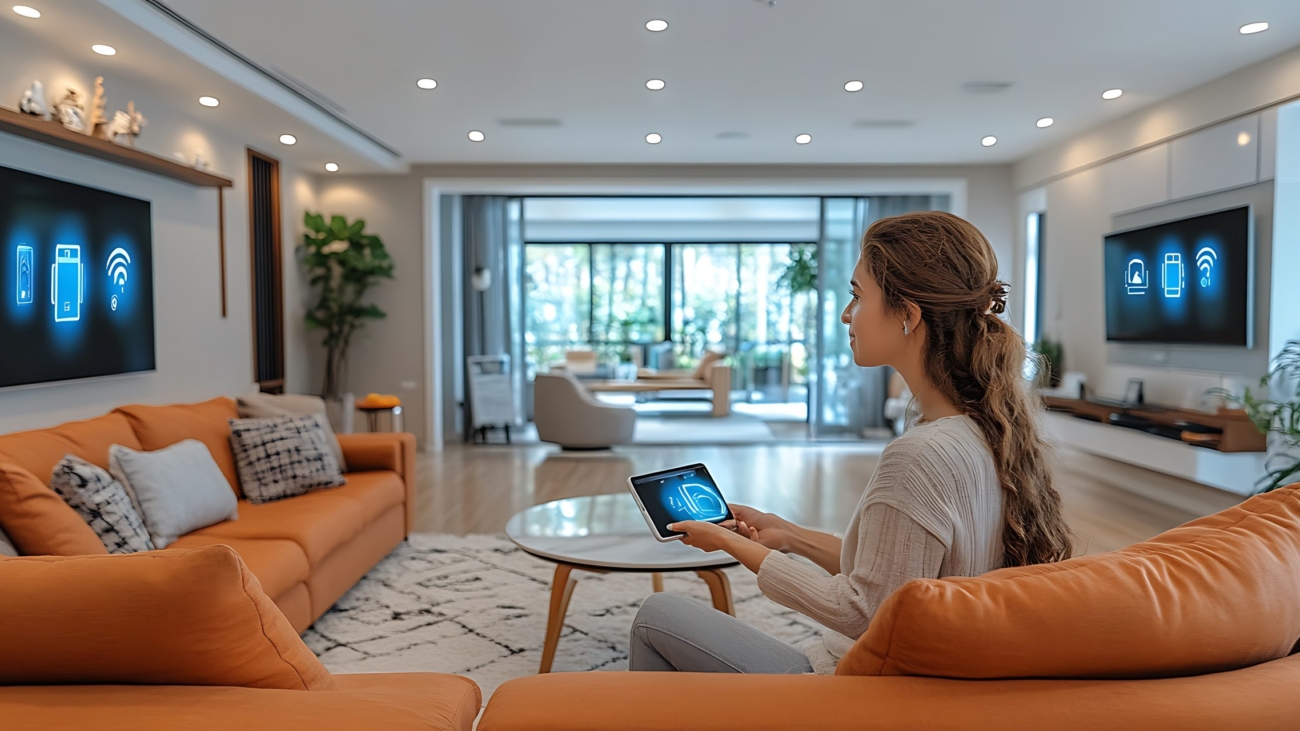
Imagine arriving home after a long day and finding the lights set to your preferred brightness, the temperature just right, and your favorite evening playlist ready to play. With a well-designed smart home system, these small conveniences can become part of your everyday routine.
Smart home automation is changing how people across the United States interact with their homes. From modern city apartments and suburban family houses to spacious custom-built residences, connected technology offers new ways to manage comfort, convenience, security, and energy use.
Instead of controlling lighting, heating and cooling, motorized curtains, security devices, and entertainment equipment separately, homeowners can bring compatible technologies together through a coordinated system. Depending on the installation, controls may be available through a smartphone, tablet, wall-mounted panel, or compatible voice assistant.
But smart living is about more than controlling devices remotely. It is about creating a home that responds to your routines, supports your lifestyle, and makes everyday tasks easier to manage.
Whether you are building a new home, renovating an existing property, or introducing your first connected devices, understanding how home automation works can help you make informed decisions and choose technology that suits your needs.
What Is Smart Home Automation?
Smart home automation connects compatible devices and systems so they can be controlled individually or work together through a shared platform. Depending on the setup, homeowners can adjust settings manually, establish schedules, create customized routines, or use supported sensors to trigger certain actions automatically.
For example, a morning routine might turn on selected lights, adjust the thermostat, and open compatible motorized shades. An evening scene could dim the living room lights, close the curtains, and prepare connected entertainment equipment.
Some systems focus on a few essential functions, while others coordinate technologies throughout the entire property. The right configuration depends on the home’s layout, existing infrastructure, household preferences, and the level of integration desired.
Common smart home features include:
- Smart lighting: Control brightness, schedules, and selected lighting scenes.
- Climate control: Manage compatible heating, ventilation, and air conditioning systems.
- Motorized curtains and shades: Adjust window treatments through scheduled or manual controls.
- Smart security: Monitor compatible cameras, sensors, locks, and other security devices.
- Home entertainment: Coordinate supported televisions, speakers, and home theater equipment.
- Network connectivity: Provide the infrastructure needed for connected devices to communicate.
- Centralized control: Manage selected home functions through a unified interface.
The goal is to make technology work together in a way that feels natural rather than adding another layer of complexity to everyday life.
How Does a Smart Home System Work?
Behind every convenient smart home experience is a combination of devices, communication technologies, control platforms, and programmed instructions.
Smart devices perform specific tasks. Sensors can detect conditions such as movement, temperature, or changes in light levels. A controller or automation platform coordinates compatible equipment, while an interface allows homeowners to manage settings and routines.
These components may communicate through wired connections, Wi-Fi, or other supported wireless protocols. Some installations combine several methods to meet the needs of different devices and areas of the property.
Consider a simple example: you activate a movie-night scene from a wall panel. The system dims selected lights, closes compatible motorized curtains, and prepares supported entertainment equipment. Instead of operating each device separately, you initiate several configured actions through one command.
Other routines may follow a schedule or respond to a supported sensor. However, automated behavior depends on how the system has been programmed, which devices are compatible, and whether the necessary network or control connections are available.
Some systems also offer remote access, allowing homeowners to manage selected functions while away from the property. Remote features may depend on an internet connection, account settings, and the manufacturer’s platform.
A well-designed system makes these interactions straightforward while allowing residents to retain practical control over their home.
The Everyday Benefits of Smart Home Living
1. Greater Comfort and Convenience
Small tasks can become surprisingly repetitive when every system needs to be adjusted separately. Smart home automation can simplify these routines by bringing compatible functions together.
A single command may prepare the living room for relaxation, while a scheduled routine can manage selected lighting or climate settings throughout the day. Homeowners can also adjust supported devices from convenient control points instead of walking from room to room.
The biggest benefit is flexibility. You can create routines that reflect how your household actually lives, then change them as your schedule or preferences evolve.
2. More Control Over Home Security
Smart security technologies can help homeowners monitor selected aspects of their property and manage access more conveniently.
Depending on the system, features may include compatible security cameras, motion sensors, door and window sensors, smart locks, video intercoms, and notifications about configured events.
For example, a homeowner may be able to check a supported camera feed, review an alert, or confirm the status of a connected lock through an application. Some systems also allow selected security functions to be included in a departure routine.
These features can improve visibility and make certain tasks easier, but they do not guarantee protection against every threat. Secure account settings, software updates, appropriate permissions, and sound physical security practices remain important.
3. More Thoughtful Energy Management
Smart home technology can help households manage how certain systems operate throughout the day.
Lighting schedules, occupancy-based controls, and programmable thermostats may reduce unnecessary operation when configured appropriately. Homeowners can also use zone-based climate controls, where supported, to manage different areas according to their needs.
In the United States, heating and cooling requirements vary significantly by region. A home in a hot climate may have different priorities from a property that experiences long, cold winters. The most useful automation strategy accounts for local conditions, equipment efficiency, insulation, and household routines.
Smart technology does not guarantee lower utility bills. Results depend on the systems installed, existing energy performance, settings, and how the home is used. Reviewing actual consumption can help determine whether adjustments are delivering meaningful benefits.
4. Greater Flexibility and Personalization
Every household has its own routines. Some people prefer bright lighting in the morning, while others want softer illumination in the evening. Families may need different settings for shared spaces, bedrooms, work areas, and entertainment rooms.
Smart home automation allows compatible devices to be organized into personalized scenes and schedules. These settings can be adjusted as preferences change, giving homeowners more flexibility without requiring a complete system redesign.
The most effective solution is not necessarily the one with the most features. It is the one that supports the activities and habits that matter most to the people living there.
Smart Lighting: Setting the Mood in Every Room
Lighting influences how a home looks and feels. It can make a kitchen more functional, highlight architectural details, create a welcoming entryway, or bring a sense of calm to a bedroom.
Smart lighting systems can provide control over compatible fixtures, dimmers, schedules, and lighting groups. Depending on the equipment, homeowners may also adjust color temperature or choose different colors for particular settings.
Customized scenes make these controls easier to manage. A dinner scene could create softer lighting in the dining area, while a work scene provides brighter illumination in a home office. A nighttime routine might switch off selected lights while keeping designated pathway lighting on.
In larger American homes, lighting can be organized by floor, room, or outdoor zone. This can be especially useful when a property includes several living areas, a finished basement, a garage, or outdoor entertaining spaces.
For new construction and major renovations, planning lighting controls alongside electrical layouts can help ensure that fixtures, switches, and automation equipment work together. Existing homes may also accommodate smart bulbs, compatible switches, or wireless controls, depending on the wiring and devices already installed.
Smart Climate Control for Year-Round Comfort
A comfortable home depends on more than a thermostat setting. Temperature preferences, room usage, outdoor conditions, and the efficiency of the heating and cooling equipment all influence the indoor environment.
Smart climate controls can help homeowners manage compatible HVAC systems through schedules, remote adjustments, and, where supported, separate temperature zones.
For example, a household might use one schedule for weekdays and another for weekends. Selected rooms could follow different settings when the system supports zoning, while a departure routine may adjust heating or cooling during periods when the home is unoccupied.
Some platforms can also provide information about indoor conditions or help identify unusual system behavior. The features available vary by thermostat, HVAC equipment, and automation platform.
Before integrating climate controls, confirm that the selected technology is compatible with the home’s heating and cooling system. Professional assessment may be particularly useful for complex installations, multi-zone equipment, or properties using specialized HVAC configurations.
Motorized Curtains and Shades
Window treatments can play an important role in comfort, privacy, and interior design. Motorized curtains and shades add convenience by allowing compatible coverings to be adjusted through a switch, application, or configured routine.
A morning scene might open selected shades to bring natural daylight into a living area. In the evening, a routine could close the curtains and coordinate them with softer interior lighting.
Depending on the material, window orientation, and installation, shades may also help manage glare and solar heat gain. Their effectiveness varies, so they should be selected according to the room’s requirements and the property’s window design.
Motorized window treatments can be especially practical for large windows, tall ceilings, or areas where multiple coverings would otherwise need to be adjusted manually.
For a cohesive result, consider the curtain motors, power requirements, control methods, and compatibility with the wider automation system before installation.
Smart Security, Locks, and Video Intercoms
Security technology has become an important part of the connected home, offering additional ways to monitor entry points and manage access.
Depending on the installation, a smart security setup may include cameras, motion sensors, smart locks, video doorbells, and video intercom systems. These devices can provide notifications, allow authorized users to review selected information, or make it easier to communicate with visitors.
A connected lock may allow a homeowner to manage supported access permissions, while a video intercom can help identify visitors before granting entry. Security cameras may provide live viewing or recorded footage, depending on the equipment and service.
When selecting these products, consider more than convenience. Look at data storage, account protection, user permissions, software updates, and whether recordings are processed locally or through cloud services.
Privacy requirements and applicable laws may also affect where cameras can be placed and how recordings are used. Homeowners should configure security devices responsibly and ensure that everyone who needs access understands how the system operates.
Entertainment and the Connected Living Experience
A home theater, family room, or outdoor entertainment area can benefit from coordinated technology.
Smart home automation can bring compatible televisions, audio systems, speakers, lighting, and motorized curtains into customized scenes. With one command, a homeowner might dim the lights, close the shades, and prepare the entertainment equipment for a movie.
Multiroom audio systems may allow different areas to play separate content or share the same music, depending on the platform. This can be useful for homes with open-plan living areas, dedicated media rooms, patios, or outdoor kitchens.
Good integration requires attention to equipment compatibility, network performance, audio placement, and how residents prefer to control their devices.
The goal is to make entertainment easier to enjoy without turning a relaxing activity into a technical exercise.
Centralized Control: Managing Your Home From One Place
As the number of connected devices grows, using a separate application for every product can become inconvenient. A centralized control platform can bring supported functions together, giving homeowners a clearer way to manage the home.
Depending on the system, a central interface may provide access to lighting, climate settings, curtains, entertainment, and selected security features. Wall-mounted panels can offer convenient control in frequently used areas, while mobile applications may provide access to supported functions from elsewhere.
Voice control can provide an additional option for compatible devices, although it is not necessary for every installation.
Good interface design matters. Frequently used controls should be easy to find, routine names should be clear, and household members should be able to make manual adjustments without unnecessary steps.
It is also worth considering what happens if the internet connection is interrupted. Some functions may continue operating locally, while others may rely on cloud services. Ask the installer or manufacturer which features remain available during a connectivity outage.
Wired, Wireless, and Hybrid Smart Home Systems
Smart home technology can be installed using different communication methods, and each approach has practical considerations.
Wired systems use physical connections to link compatible equipment and controllers. They may be particularly suitable for new construction or major renovations, when wiring and infrastructure can be planned in advance.
Wireless systems communicate using supported wireless technologies. They can be useful for introducing automation into an existing home, although performance depends on network coverage, interference, device compatibility, and the requirements of the installation.
Hybrid systems combine wired and wireless technologies to accommodate different devices and property conditions.
There is no universal solution for every home in the United States. The right choice depends on the property’s structure, the systems being integrated, reliability requirements, installation budget, and future plans.
Before committing to a platform, consider how devices communicate, whether the system supports expansion, and what technical assistance will be available after installation.
Smart Home Automation for New Builds and Existing Homes
You do not need to build a new property to enjoy smart home technology. The best starting point depends on whether you are designing a home from the ground up or upgrading an existing one.
For New Construction
Building a home provides an opportunity to plan automation alongside electrical work, lighting design, HVAC installation, and network infrastructure. This can make it easier to position control panels, provide the necessary wiring, and coordinate equipment before walls and ceilings are finished.
It is also a good time to consider future needs, including additional rooms, outdoor features, and changes in how the household may use the property.
For Existing Homes
Homeowners can often begin with a few carefully selected upgrades, such as smart lighting, a compatible thermostat, a video doorbell, or automated window treatments.
A gradual approach allows you to understand which features are genuinely useful before expanding the system. However, compatibility should be checked before purchasing devices, especially when integrating products from different manufacturers.
For both new and existing homes, professional guidance can help prevent disconnected devices, overlapping controls, and costly changes later.
How to Choose the Right Smart Home System
With so many products and platforms available, choosing a smart home solution can feel overwhelming. A clear set of priorities makes the process easier.
Start with everyday needs. Identify the tasks you would most like to simplify. You may want more convenient lighting control, better climate scheduling, easier access management, or a unified entertainment setup.
Check compatibility. Confirm that the devices you select can communicate with one another and work with the intended control platform.
Consider usability. Choose interfaces that are easy for household members to understand, including people who may not be comfortable with complex technology.
Plan for reliability. Review network requirements, power needs, local control options, and the behavior of essential functions during outages.
Protect privacy and security. Use strong authentication, maintain software updates, manage user permissions, and review how connected devices collect and store data.
Allow for future changes. Where possible, select a platform that can accommodate additional compatible devices without requiring a complete replacement.
Evaluate ongoing support. Consider warranty terms, maintenance requirements, product availability, and access to qualified professionals in your area.
A thoughtful selection process can help you build a system that delivers practical value instead of unnecessary complexity.
The Role of Professional Installation
Individual smart devices may be straightforward to install, but a fully integrated home automation system requires more coordination.
A professional installer can review the property, identify compatible equipment, assess wiring and network requirements, and design a control strategy around the household’s priorities. This becomes particularly important when integrating lighting, HVAC, motorized window treatments, security, and entertainment.
Installation is only one stage of the process. The system also needs to be configured, tested, and explained to the people who will use it.
Homeowners should understand how to adjust settings, create or modify routines, manage access permissions, and request technical assistance. It is also helpful to establish who will handle software updates, troubleshooting, and future upgrades.
The aim is to make the technology dependable and intuitive, with the complicated work taking place behind the scenes.
Smart Home Automation and Property Value
Smart home features may appeal to buyers who value convenience, connected technology, and modern home functionality. Features such as integrated lighting, climate controls, smart locks, and a well-designed entertainment setup can contribute to the overall appeal of a property.
However, automation does not automatically increase a home’s market value. The effect depends on local buyer preferences, the quality and age of the installation, compatibility, maintenance requirements, and the broader real estate market.
Homeowners considering automation as a long-term investment should prioritize useful, reliable features over technology installed solely for marketing purposes.
It is also worth keeping documentation for the system, including equipment details, configuration information, warranties, and instructions for future owners. A system that is easy to understand and maintain may be more appealing than one that depends on specialized knowledge or difficult-to-access services.
The Future of Smart Living in the United States
Smart home technology continues to develop as connected devices become more capable and automation platforms improve their ability to coordinate different systems.
Artificial intelligence may support more adaptive experiences, such as analyzing selected patterns, suggesting adjustments, or helping certain devices respond to changing conditions. Interoperability improvements may also make it easier for compatible products from different manufacturers to work together.
At the same time, homeowners will continue to need clear controls, dependable performance, strong privacy protections, and the ability to decide which functions should be automated.
Not every household needs an AI-powered system or a fully connected property. In many cases, a few reliable devices and well-designed routines can deliver the most meaningful improvements.
The future of smart living is not simply about making homes more advanced. It is about making technology more useful, more accessible, and better aligned with everyday life.
Create a Home That Works Around You
Smart home automation brings together technology and thoughtful design to help homeowners manage their surroundings with greater convenience and flexibility. From lighting and climate control to security, entertainment, and centralized management, compatible systems can simplify daily routines and create a more connected living environment.
For homeowners across the United States, the best approach begins with the property itself: its layout, existing infrastructure, regional climate, household routines, and future needs.
Whether you introduce a few smart devices or plan a whole-home installation, focus on solutions that are reliable, easy to use, and designed to work together. Professional planning, careful compatibility checks, and attention to privacy can help ensure that the system remains practical over time.
Ultimately, smart living is not about having a device for everything. It is about making your home more comfortable, manageable, and personal through technology that serves a clear purpose.